Medicaid Spend-Down Rules for Seniors
How seniors can qualify for Medicaid coverage despite exceeding asset limits.
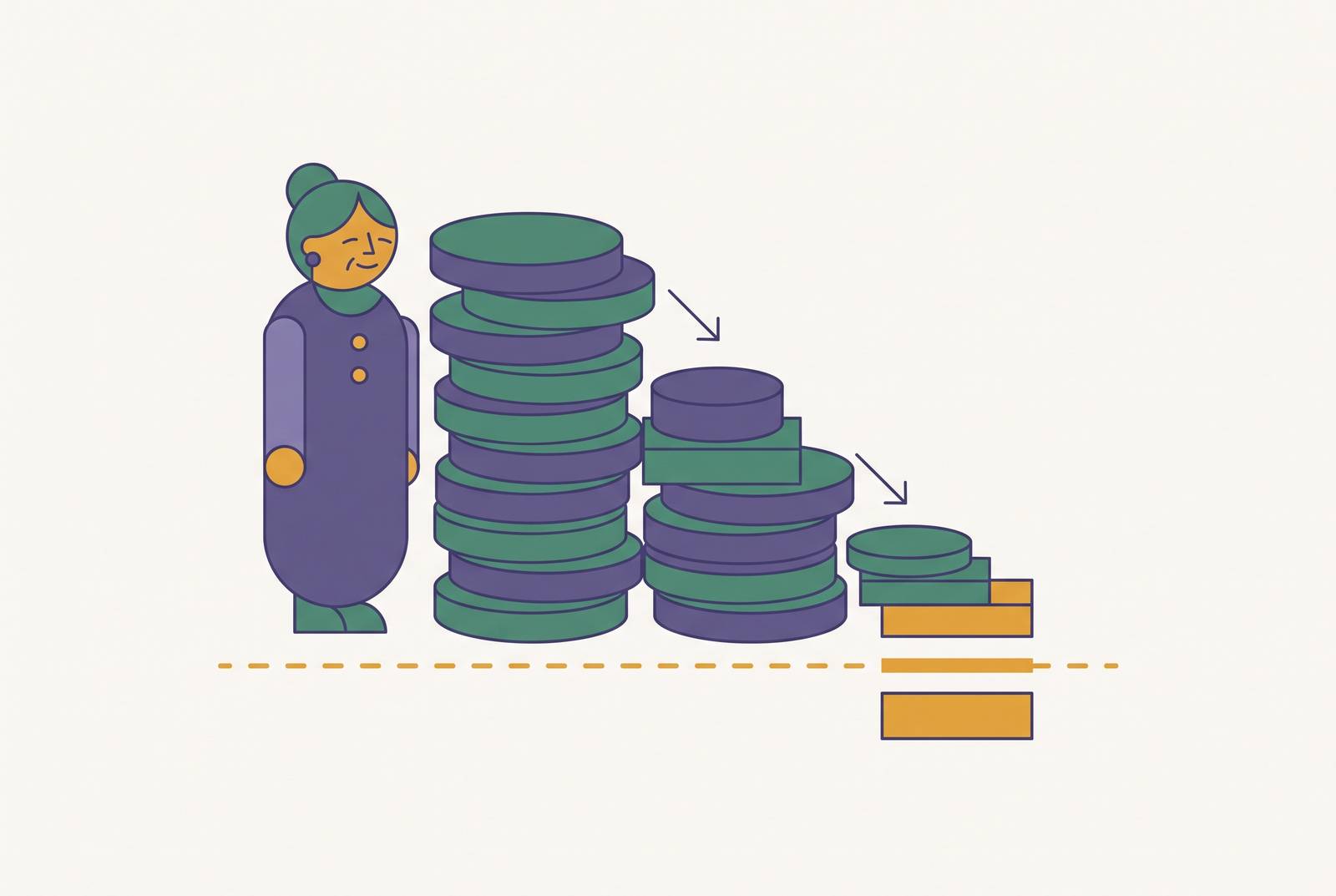
More than 7 million Americans aged 65 and older rely on Medicaid to cover long-term care, making it the single largest payer of nursing home services in the country. Medicare, by contrast, covers a maximum of 100 days of skilled nursing care after a qualifying hospital stay, and it was never built to pay for the custodial care that most seniors in nursing homes actually need. With nursing home costs running $8,000 to $15,000 a month in many states, the gap between what Medicare pays and what care costs is exactly where spend-down becomes not a planning curiosity but a financial necessity for a huge share of families in the country.
Here's the bind: many seniors on fixed incomes have saved just enough, or own just enough, to sit slightly above Medicaid's eligibility thresholds. That means a lifetime of prudent saving can lock someone out of the coverage they need most, at the exact moment they need it. Medicaid's spend-down rules exist to bridge that gap. Most families don't know the mechanism exists until a hospital discharge planner mentions it in passing, which is usually too late to plan well. This piece walks through how spend-down actually works, where the rules trip people up, and what the numbers look like heading into 2026.
What spend-down is, and what it is not
Spend-down is a mechanism built into Medicaid's eligibility structure that lets applicants who exceed income or asset limits still qualify, by reducing what Medicaid counts against them. It's a mechanism built into Medicaid's eligibility structure that lets applicants who exceed income or asset limits still qualify, by reducing what Medicaid counts against them. Two distinct processes get lumped under this one word, and confusing them is probably the most common mistake families make.
Asset spend-down happens once, before an application goes in: it means reducing countable assets below the state's resource limit. Income spend-down is different in kind, not just in degree. It's a recurring, monthly process where an applicant incurs qualifying medical expenses to bring countable income down to the state's Medically Needy Income Limit, or MNIL. Think of it like an insurance deductible. Once medical expenses for a given budget period equal the "excess income" for that period, Medicaid steps in and pays for covered services for whatever time remains in that period. Miss that distinction between a one-time asset reduction and an ongoing income calculation, and the entire planning timeline falls apart.
There is no such thing as "Medicare spend-down." Medicare has no asset test at all, so the phrase is simply incorrect, though it circulates often enough that it needs to be named and dismissed. Conflating the two programs is how families end up thinking Medicare will somehow pick up costs it was never designed to cover.
States also don't use the same name for this mechanism, which adds a layer of confusion nobody asked for. States use different names for the program, California, for instance, calls its version Share of Cost Medi-Cal, and the labels vary enough that the same underlying idea, and a family that moves between states or just researches online can easily think these are different systems entirely.
The most important distinction of all: spending down is legally different from gifting. Gifting assets triggers a penalty period under Medicaid's look-back rules (more on that later). Spending on allowable expenses does not. Nearly every strategy discussed in this piece rests on that one line.
The two financial tests seniors must pass
Medicaid eligibility runs through two separate gates: an income test and an asset test. Fail either one, and spend-down becomes necessary. Pass both, and the conversation is moot. It sounds simple stated that way, but the thresholds shift by state, by household size, and by which Medicaid long-term care program is being applied for.
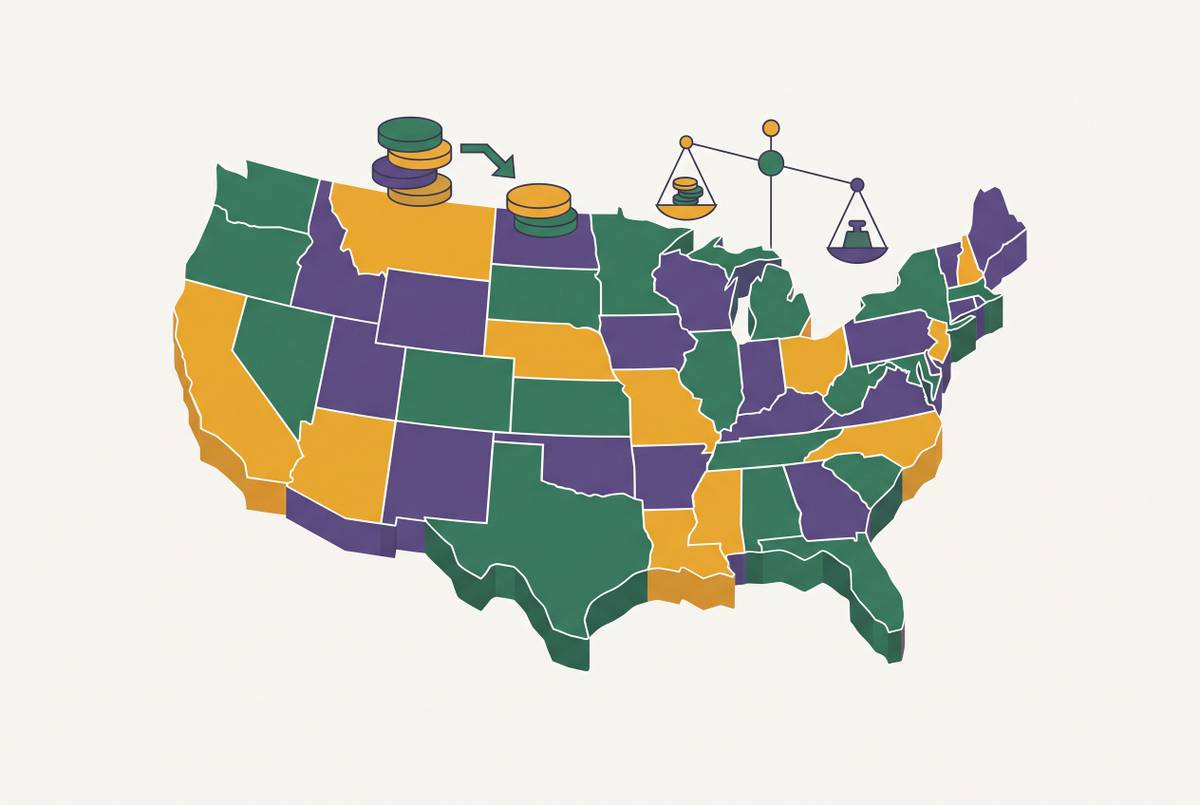
On income, institutional (nursing home) Medicaid in most states sets the cap at $2,982 a month for a single applicant in 2026, up from $2,901 the year before. Community Medicaid, which covers care outside a nursing facility, runs lower and varies more by state. Illinois sets its limit at $1,330 a month for an individual and $1,803 for a married couple where both are applying, effective from April 2026 for a full year. New York sets its figure at $1,836 a month for a single elderly or disabled applicant in 2026. The Medically Needy Income Limit, the number income must be spent down to, swings even more widely: around $425 a month for an individual in Pennsylvania versus more than $1,300 a month in a state like Minnesota. That's roughly a threefold difference for what is, on paper, the same federal program.
Asset limits show a similar pattern. In most states, an individual applicant can hold no more than $2,000 in countable assets, with couples where both spouses are applying allowed $3,000 or $4,000 combined, across all three main Medicaid long-term care program types. But "most states" is doing a lot of work in that sentence. Connecticut sets its individual limit at $1,600. Mississippi allows $4,000. Illinois allows $17,500. New York allows $33,038. California allows $130,000, a figure more than 80 times higher than Connecticut's. Notably, most states left these asset limits untouched for 2026 even as income limits got their usual adjustment, so a lot of these numbers are simply holdovers from prior years.
What does that gap actually mean for a family? A senior sitting on $50,000 in savings is comfortably under the limit in California and doesn't need to touch a strategy in this article. That same $50,000, for a senior in Connecticut, means spending down the overwhelming majority of it before Medicaid enters the picture. State of residence, in other words, may be the single most consequential variable in this entire process, more than the size of the estate itself.
Which assets count toward the limit
Not everything a senior owns gets thrown into the countable pile. Cash, bank accounts, time-deposit savings certificates, stocks, bonds, mutual funds, vacation homes, and most life insurance policies all count against the asset limit. But a meaningful list of assets sits outside that count entirely, and knowing which ones changes the whole spend-down math.
The primary home is exempt, provided the applicant or a qualifying family member lives there, and provided home equity doesn't exceed $752,000 (up to $1,130,000 in a handful of states). If a spouse, a minor child, or a disabled child of any age lives in the home, it stays exempt regardless of how much equity has built up in it. One vehicle is exempt. Personal belongings, household furnishings, and clothing are exempt. Term life insurance below a low value threshold is exempt, as are Irrevocable Funeral Trusts, prepaid burial arrangements, and Medicaid Compliant Annuities once purchased.
Retirement accounts are the messiest category on this list, and probably the one most families get wrong. IRAs and 401(k)s count as assets in roughly 37 states in most circumstances. But some states exempt them once the owner starts taking required minimum distributions, at which point the monthly payout gets counted as income instead of the account balance being counted as an asset. That's a meaningful shift: an account that looked like a substantial liability under the asset test becomes an income stream of a few hundred dollars a month instead. And here's a detail that trips up even attentive families: about 30 states count the non-applicant spouse's retirement account too, not just the applicant's.
So before anyone starts liquidating anything, the smarter move is figuring out what's already exempt. Families regularly overestimate how much needs to be spent down simply because nobody sat down and sorted assets into "countable" and "exempt" columns first. And the home deserves a second look here too. A house that looks safely exempt today can lose that status the moment the qualifying resident moves out or passes away, if remaining equity sits above the state cap. It's a scenario that plays out whenever a community spouse eventually needs care of their own, or passes on, and the home sits empty.
How income spend-down works
Roughly 32 states plus one additional jurisdiction. run what's called a Medicaid medically needy program, which allows income spend-down. The remaining states are "income cap states," and they don't allow this pathway for long-term care Medicaid at all. That's a meaningful split, not a minor technicality. States offering the medically needy option for at least one long-term care Medicaid program include Arkansas, California, Connecticut, Florida, Georgia, Hawaii, Illinois, Iowa, Kansas, Kentucky, Louisiana, Maine, Maryland, Massachusetts, Michigan, Minnesota, Missouri, Montana, Nebraska, New Hampshire, New Jersey, New York, North Carolina, North Dakota, Pennsylvania, Rhode Island, Utah, Vermont, Virginia, Washington, West Virginia, and Wisconsin, along with one additional jurisdiction.
Texas has a specific quirk. Its medically needy program only covers pregnant women and children, meaning seniors and people with disabilities in Texas have no income spend-down pathway at all, regardless of how large their medical bills run.
The mechanics work like this: subtract the state's MNIL from monthly income to get the "excess income," which is the spend-down amount. Income of $2,200 against an MNIL of $2,000 leaves a $200 monthly spend-down. Once incurred medical expenses for that budget period equal $200, Medicaid picks up covered services for whatever remains of the period. Budget periods run anywhere from one to six months depending on the state, with federal rules capping it at six months maximum.
Every state accepts health insurance premiums, including Medicare premiums, as qualifying expenses. Beyond that, the list varies: medical bills whether paid or unpaid, prescription costs, doctor visits, dental care, medical equipment, transportation to appointments. In New York, certain unpaid bills can be applied toward spend-down, while paid bills only count if the service was provided and paid for within the three calendar months before the application month. That means a large, old, unpaid hospital bill can end up satisfying a senior's spend-down obligation for months, sometimes longer, into the future.
For applicants in income cap states, the tool of choice is a Qualified Income Trust, often called a Miller Trust. It's an irrevocable trust that excess income gets deposited into each month, and the funds inside can only go toward the senior's long-term care and medical costs, under a trustee's control. It's a different mechanism solving the same underlying problem: income too high for the state's limit, but not high enough to actually pay for care.
Legal strategies for spending down assets without triggering penalties
The gap between unplanned spend-down (paying the nursing home directly until the bank account hits zero) and strategic spend-down can run anywhere from $20,000 to $60,000 preserved for the family, depending on the size of the estate, a difference substantial enough to change a spouse's financial footing. That's not a marginal difference. A spouse who benefits from strategic spend-down has a cushion, while a spouse who doesn't has nothing.
Several strategies reduce countable assets without tripping the look-back period, which is the line that separates legitimate spend-down from a penalized gift. Paying off debt is the most straightforward: mortgage balances, car loans, credit card debt, and medical debt all reduce countable assets dollar for dollar, with no penalty attached. Home modifications count too. Ramps, grab bars, wheelchair-accessible bathrooms, and general repairs are all permissible spend-down purchases, and they double as improvements that make aging in place safer.
Irrevocable Funeral Trusts let families prepay funeral and burial costs, generally up to $15,000 per spouse depending on the state. Medicaid Compliant Annuities take a lump sum of countable cash and convert it into a stream of monthly payments over the annuity's term, effectively turning an asset into income without violating the look-back rules, though the annuity has to be structured to specific requirements to qualify. Personal Care Agreements, formal contracts that compensate a family member for caregiving, can also work as a spend-down vehicle, but the rules here are strict, and errors get treated as improper transfers rather than legitimate payment for services.
A Medicaid Asset Protection Trust, or MAPT, removes assets from the countable estate entirely. But it runs headlong into the look-back period discussed in the next section, so it has to be set up years in advance to actually work. It is not a short-term fix, and treating it as one is a mistake.
Spending has to benefit the applicant or their spouse. Money spent on adult children or other relatives isn't spend-down, it's a gift, and gifts trigger the penalties covered next. Every receipt from every spend-down purchase needs to be saved and submitted with the application to prove compliance. And the order in which all of this happens, which debts get paid first, when a trust gets funded, when an annuity gets purchased, changes both how much gets preserved and how long the whole process takes. This is the point in the process where professional guidance tends to earn its cost many times over.
The 5-year look-back period
Medicaid, in most states, reviews every asset transfer made within 60 months, five years, of the long-term care application date. Any gift or below-market transfer inside that window creates a penalty period, a stretch of time during which Medicaid won't pay for care even if the applicant is otherwise approved.
Here's how the math actually works. Say a parent gifts $60,000 to an adult child two years before applying for Medicaid, and the state's average private-pay nursing home cost runs $6,000 a month. Divide $60,000 by $6,000, and the penalty period comes out to 10 months. During those 10 months, Medicaid pays nothing toward care, even though the application otherwise clears. That's 10 months of nursing home bills, potentially a cost ranging from tens of thousands of dollars to well over a hundred thousand depending on the state, with no coverage and often no remaining assets to cover it either.
The divisor in that calculation, the state's average private-pay nursing home rate, isn't fixed nationally. It varies state by state, so an identical $60,000 gift produces a longer penalty in a low-cost state and a shorter one in a high-cost state. Selling an asset for less than fair market value triggers the same look-back scrutiny as an outright gift, which surprises families who think of it as a sale rather than a transfer.
California is running its own version of this right now. The state historically used a 30-month look-back for Medi-Cal long-term care, then moved away from it, and is now reinstating the 30-month window for transfers made on or after January 1, 2026. That reinstatement phases in gradually starting February 1, 2026, and reaches the full 30 months by July 2028. Given how much this rule has moved in California, anyone applying there should confirm the current status rather than assume it's settled.
This is also where the MAPT timing point from the last section comes back around. A trust set up within the five-year window doesn't dodge the look-back, it just walks straight into it. Families sometimes discover this only after the trust has already been funded, which is an expensive way to learn the rule.
The most common mistake in this entire area is ordinary generosity. It's ordinary generosity. A parent helps a grandchild with tuition, or gives a child a down payment on a house, years before anyone is thinking about nursing homes. None of that looks like elder law planning at the time. If a long-term care need occurs within five years, that gift becomes a countable transfer, and the resulting penalty period can leave a senior with no assets and no coverage at exactly the moment both are needed most.
Spousal protections that change the spend-down calculation for married couples
Married couples don't spend down under the same rules as single applicants, and for good reason. Federal law includes specific protections to keep a healthy spouse at home from being financially wiped out while the other spouse enters a nursing home.
The centerpiece is the Community Spouse Resource Allowance, or CSRA. As of January 1, 2026, the spouse who isn't applying can keep up to $162,660 in assets, entirely separate from the $2,000 limit that applies to the applicant spouse in most states. In what are called "50% states," the community spouse retains up to half the couple's combined assets, capped at that same $162,660 figure, with a minimum floor guaranteed regardless of how small the couple's total assets are.
The home carries its own protection here too: it stays exempt for the community spouse no matter how much equity has built up, as long as that spouse continues living there. That's a meaningful backstop, since home equity is often the largest single asset a couple holds.
Retirement accounts remain the exception that resists easy protection. As noted earlier, roughly 30 states count the non-applicant spouse's individual retirement account or employer-sponsored retirement plan as a countable asset, so a comfortable retirement account, one that has nothing to do with paying for the other spouse's nursing home care, can still factor into the eligibility math. A community spouse can, in a majority of applying states, do everything right, retain the maximum CSRA, and still find their own retirement savings pulled into a calculation meant to determine their spouse's care. Spend-down, for all its structure, still leaves real financial exposure at the edges, and the state-by-state variation running through every section of this piece is a central thread rather than a footnote. It's the whole story.