Medicaid Enrollment Platforms for Family Caregivers Compared on Automation Depth
How deep platforms go in Medicaid enrollment automation determines what families still must do.
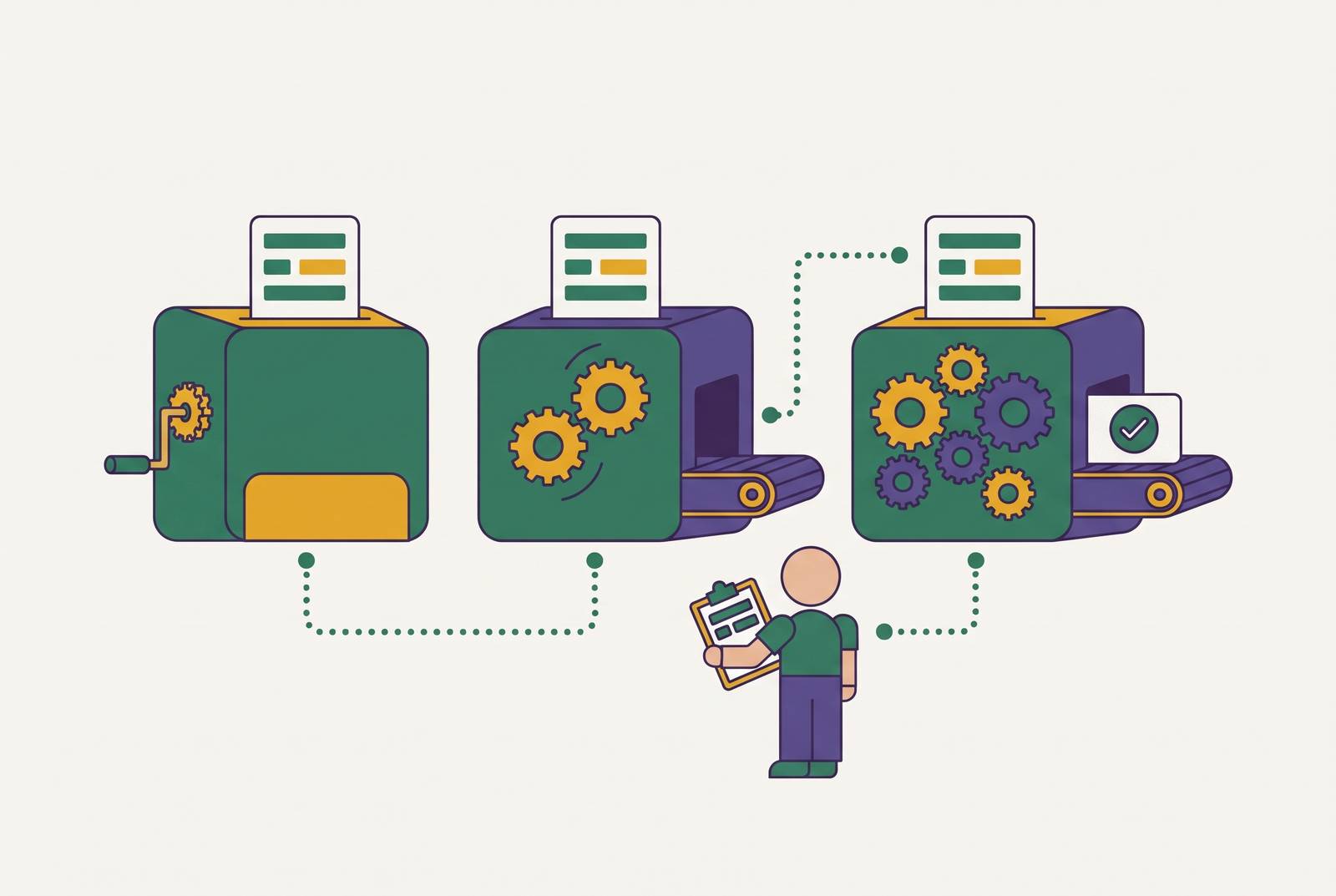
End-to-end Medicaid enrollment automation for family caregivers means help that goes beyond an eligibility result, from finding a benefit through completing the application for their state. Platforms differ in how much of that work they handle and whether support extends to renewals and the fiscal intermediary. The useful comparison is automation depth, with clear boundaries around what software completes, what people support, and what the caregiver must still do.
Why automation depth is the right lens for comparing Medicaid enrollment platforms
An eligibility result and a completed application are different outcomes, even when both come from tools described as automated. A screener may find a program that looks like a good fit without helping a family gather documents or submit the required forms. A service that does more may help with those steps but stop before payroll setup. These boundaries determine how much work remains.
KFF’s 2025 survey found that all responding states pay family caregivers under at least some circumstances. Medicaid home care is the dominant public pathway for paid family caregiving, yet its enrollment process can be opaque and overwhelming. Program availability does not establish practical access. A family still needs to recognize the right pathway and complete its requirements.
That creates two distinct needs for enrollment software. The first is discovering a program and assessing whether the care recipient and caregiver qualify. The second is completing and submitting the state-specific application. A platform can serve one need well without meeting the other, so the practical question is where its help ends. Does the caregiver leave with a possible route, an application ready to submit, or support through completion?
The Medicaid programs caregivers are trying to enroll in — and why they vary so much by state
There is no single national program for paid family caregiving. Two dominant Medicaid payment models are self-directed care and Structured Family Caregiving. Self-directed care generally pays an hourly wage to a family member hired directly, through programs such as New York’s CDPAP, California’s IHSS, and Wisconsin’s IRIS. Structured Family Caregiving instead provides a tax-free daily stipend for live-in caregivers and is available in roughly 11 states. The distinction changes which pathway a platform must assess.
KFF’s survey found that 49 of 50 responding states permit self-direction in at least some circumstances, with Alaska the exception. Among states permitting it, all allow enrollees to select, dismiss, and train workers. Who can become a paid worker varies, however. Most states allow adult children and other relatives, fewer allow spouses, and some restrict co-resident relatives. The federal 1915(j) and Community First Choice options also prohibit someone from serving simultaneously as the representative and paid worker.
These programs operate through home- and community-based services, or HCBS, waivers, state plan options, and demonstration waivers. Eligibility typically requires Medicaid financial eligibility and nursing-facility level of care, although the 1915(i) state plan option serves people with less stringent care needs. Program names alone are therefore insufficient. State plan options including 1915(i), 1915(k)/Community First Choice, and 1915(j) have distinct rules that an enrollment tool must distinguish. In self-directed programs, a financial management agency handles payroll and taxes, so families must also work with an intermediary that their software may not help them with.
What software handles the Medicaid application from start to finish? A practical spectrum
At the shallow end, eligibility screeners find state programs and check whether a person is likely to meet the basic financial and medical rules. Their output is orientation. Mid-range tools add prompts, document checklists, and state-specific instructions that walk a family through the application. The caregiver nevertheless remains responsible for submission and follow-up. These tools automate parts of the process without taking responsibility for its full course.
At the deeper end, AI-assisted enrollment tools use conversational agents to collect documents, track an application’s status, and help with it in real time. Managed care shows how this approach works on a large scale. HeyMedicaid offers support in 75+ languages, making language access a concrete point of comparison. Careforce’s work with Kern Family shows results from renewals as well as eligibility screening. These examples establish capabilities, but do not establish that either handles every state’s paid-family-caregiving pathway from start to finish.
Tools that help caregivers find benefits and guide them through enrollment sit elsewhere on this spectrum. They pair eligibility discovery with guided follow-through, sometimes combining AI assistance and human enrollment support. Their focus is the gap between finding a benefit and completing enrollment. The combined service should be assessed on whether it addresses the steps that would otherwise fall back to the family.
HHAeXchange, WellSky Personal Care, AxisCare, and CareSmartz360 automate functions such as electronic visit verification, or EVV, compliance, billing, scheduling, and claims. They belong in the comparison because the back end must support the people the front end enrolls. They are not substitutes for family-facing application help.
What caregivers actually gain — and give up — at each level of automation depth
A shallow tool offers fast orientation with little friction and no commitment to one platform’s application process. That can be enough for a caregiver deciding whether a pathway is worth pursuing. The remaining burden is substantial, however. The family still has to fill out the forms for its state, gather documents, submit the application, and follow up. Guided application tools reduce confusion around those tasks but retain a handoff when the caregiver must submit or pursue the application independently.
Deeper support can reduce time spent navigating enrollment and provide help with documents, language, and application status. Kern Family’s renewal outcome illustrates why completion is a more useful measure than the number of people screened. The evidence still has a boundary. A managed care renewal result cannot show how every caregiver enrollment tool compares or prove that a tool also helps with fiscal intermediary onboarding.
Greater delegation also creates greater dependence on platform accuracy and capacity. New York’s transition to PPL provides a concrete risk signal, developed in the next section. Language access belongs within that reliability question. For programs such as IHSS and CDPAP, serving large non-English-speaking populations, a process that is difficult to use in a caregiver’s language limits who can benefit from it.
Most consumer-facing tools do not address the financial management agency layer, so caregivers may still need separate help with payroll setup, EVV compliance, and tax treatment. Those tasks are distinct from determining Medicaid eligibility. A platform can be deep within application support and shallow at the transition to paid work, which makes an unqualified claim of “end-to-end” support difficult to interpret.
New York's CDPAP transition to PPL: what happens when automation depth fails at scale
The stated premise was efficiency and cost savings. The change put one system in charge of enrollment and payments. Portal failures, inadequate multilingual capacity, and payroll system overload then disrupted the process for consumers and caregivers.
Caregiver Tara Murphy testified that she received a pay stub showing no wages after EVV training and did not know whether PPL would pay her going forward. Consumers said they could not get enrollment directions in multiple languages. They also reported extended waits and weeks-long paperwork delays. These were failures at different points in the process, spanning access to instructions, administrative completion, and payment.
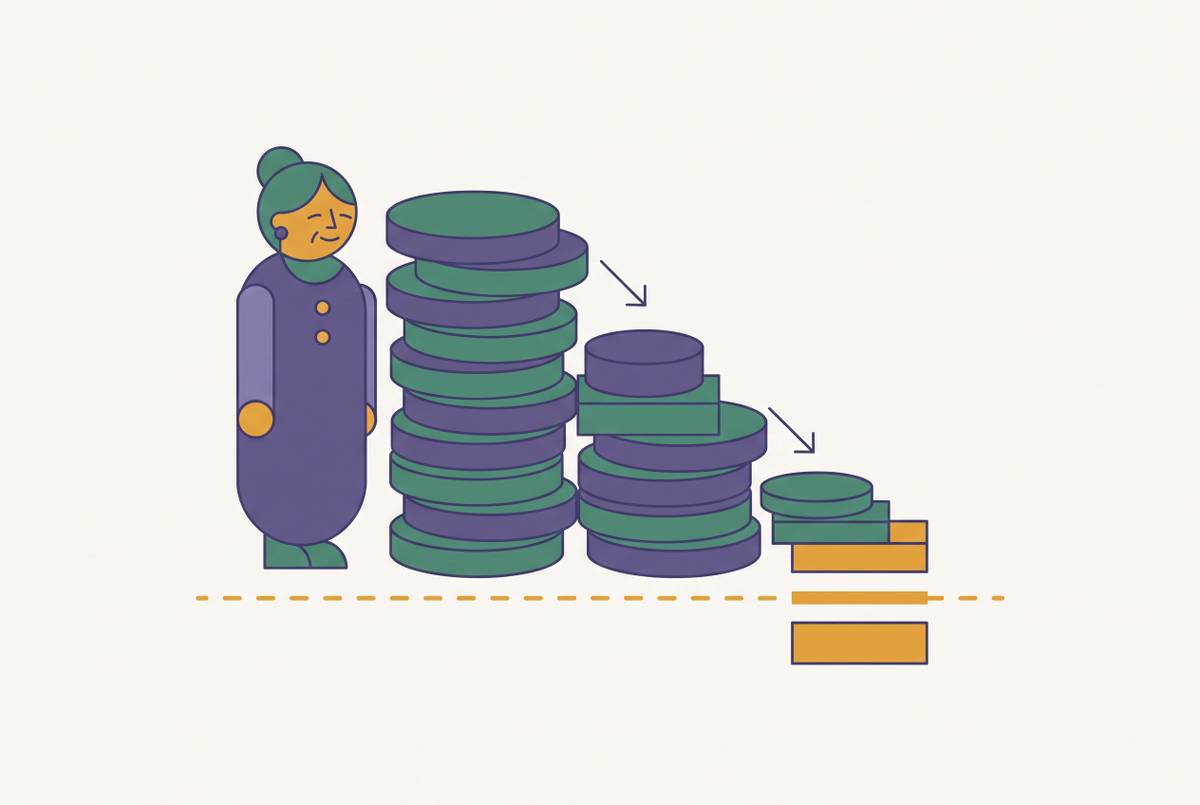
A substantial share of the roughly 280,000 consumers authorized for CDPAP left for more expensive, less flexible agency-based care. That outcome ran counter to the transition’s stated purpose. It also shows why enrollment cannot be evaluated solely as an interface or a completed form. The receiving system’s capacity affects whether a caregiver can move through the process and get paid.
The case does not establish that automation or consolidation is inherently unsuitable. Careforce’s work with Kern Family provides a contrasting example of deeper support producing a positive renewal outcome. The settings and tasks are different, so they do not support a head-to-head vendor ranking. Together, they make a narrower point. Completion capability needs multilingual access, sufficient capacity, and accountability mechanisms if families are to rely on it.
How the OBBBA's Medicaid cuts change what enrollment platforms need to do
The One Big Beautiful Bill Act of 2025, or OBBBA, was signed into law on July 4, 2025. Because it requires more frequent redeterminations and delays streamlining rules, the law changes what enrollment platforms need to do. One-time application support is no longer the full test. As the law moves affected enrollees toward 6-month redetermination cycles, continued help with eligibility becomes part of the comparison.
KFF’s issue brief estimates that the law reduces federal Medicaid spending by $911 billion over the next decade. Most home care programs are optional, making them likely targets as states respond to lower federal funding. The pressure extends beyond application administration. Changes in program access, paid hours, or rates can alter the benefit a family is trying to obtain or keep.
Arizona proposed cuts to the Parents as Paid Caregivers program, while Nebraska proposed capping paid weekly hours for live-in family caregivers. Missouri proposed reducing family caregiver pay rates. California also had billions in Medicaid payments withheld across multiple federal deferrals, largely tied to IHSS spending growth. These developments are distinct, rather than interchangeable evidence that each state has adopted the same response.
AARP’s 2025 Caregiving in the US report identifies millions of family caregivers who rely on Medicaid for their own health insurance. New work reporting requirements under the OBBBA put that coverage at risk for many. Caregivers can therefore face two separate administrative concerns. One concerns the care recipient’s access to a program that pays for family care, while the other concerns the caregiver’s own coverage. A platform that handles initial enrollment but cannot support redetermination or flag coverage-threatening rule changes leaves those ongoing needs unresolved.
What to look for in a Medicaid enrollment platform given what depth actually means
Caregivers choosing a platform should assess five dimensions of depth. These are eligibility accuracy, state-specificity, document support, multilingual access, and ongoing redetermination capability. Human expertise cuts across all five. A tool’s support needs to reach the next required step.
Eligibility accuracy begins at the program level. Can the platform distinguish an HCBS waiver from a state plan option or Structured Family Caregiving, and account for spouse, adult-child, and co-resident rules? Does the service generate and guide completion of the actual application forms, or hand the caregiver off to a state portal? That boundary reveals whether “application support” includes completion or mainly directions.
Document support should also be evaluated beyond a checklist. The caregiver needs to know whether the service helps collect required materials and whether it connects to or explains the financial management agency’s payroll, EVV, and tax requirements. Language access deserves an equally concrete test. HeyMedicaid’s 75+ language support provides a documented benchmark, while the PPL transition shows the consequences of inadequate multilingual capacity at scale. A broad claim about automation or an interface that looks good cannot answer those questions.
Ongoing support completes the assessment. Does the service help with redeterminations and changing rules, and is human expertise available for edge cases, appeals, or ambiguous requirements? AI-assisted benefit discovery with human enrollment support can be a good choice when it helps families with those needs.