Self-Directed Medicaid Waiver Programs State by State
State rules determine whether you can pay a family member to provide Medicaid-covered care.
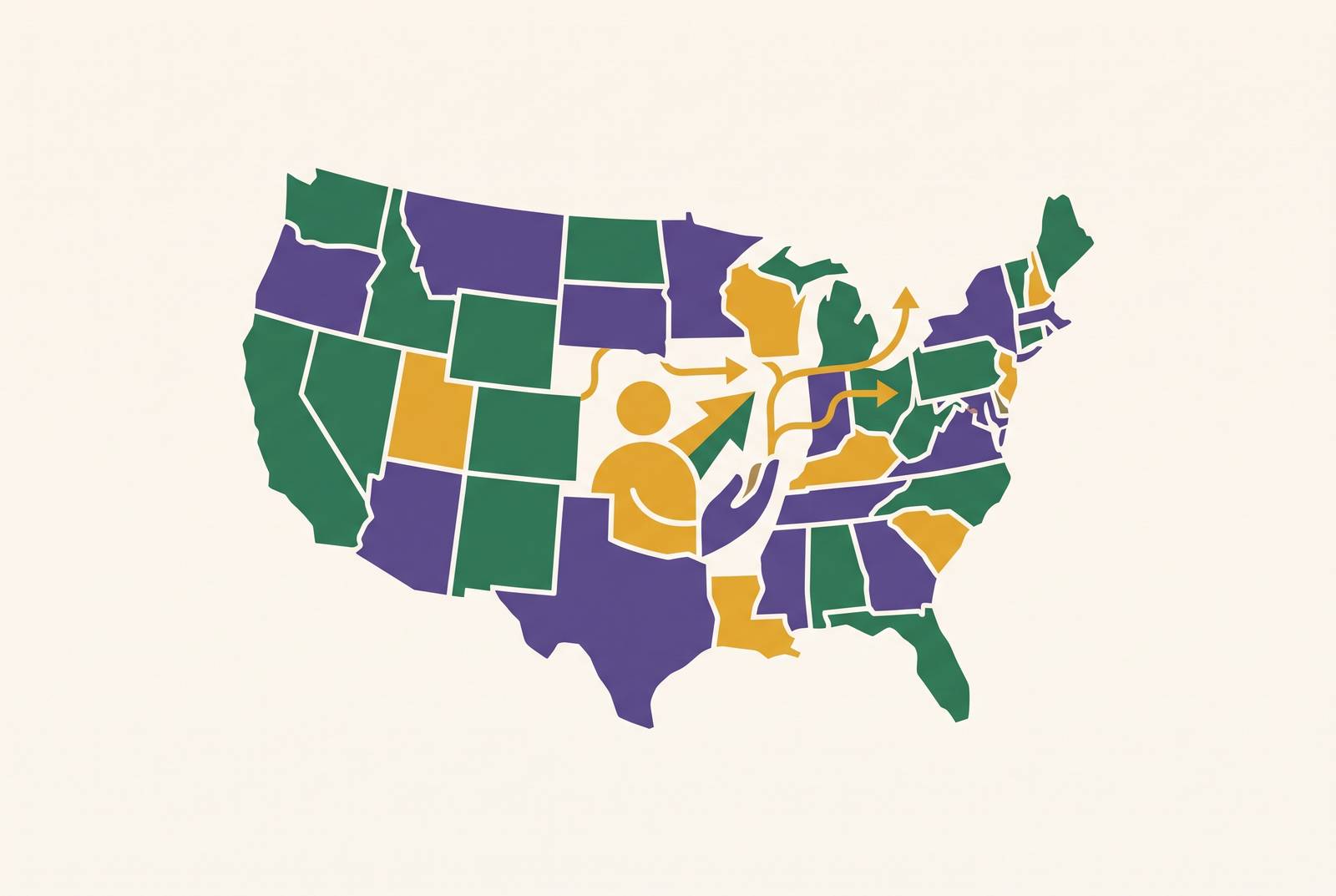
Self-directed Medicaid programs can pay family caregivers, but access depends on the state, the program, and the caregiver’s relationship to the person receiving care. This state-by-state guide explains why eligibility alone is not enough. Brevy’s AI-powered platform is one option for identifying caregiver compensation programs and getting enrollment support, but payment to a family member requires permission under the specific state program’s rules.
What self-directed Medicaid waiver programs actually are and who they serve
Self-direction transfers authority over who provides care, when, and how from an agency to the person receiving care. The model grew out of consumer-directed personal care demonstrations that the Robert Wood Johnson Foundation paid for. It is now available in more than half of all Section 1915(c) waivers nationally, most frequently for people with intellectual or developmental disabilities (I/DD), followed by older adults and people with physical disabilities.
The scope of that control matters. “Employer authority” lets participants hire, train, and dismiss workers, while “budget authority” lets them manage a flexible spending budget. States may offer one or both. KFF’s 2025 Medicaid home care survey found that all responding states pay family caregivers under at least some circumstances, making self-direction a possible route to paying a relative for care.
The three federal legal vehicles that determine whether self-direction is available in a state
Section 1915(c) home- and community-based services (HCBS) waivers are the main vehicle. They let states target populations, select services, and limit enrollment. So Texas HCS, Florida iBudget, and New York OPWDD Comprehensive use the same federal authority but have different benefits and rules for who can get them.
Section 1915(k) Community First Choice (CFC) is different. It is a state plan option and provides attendant care as an entitlement without a waitlist. Adopting states must offer self-direction and receive an enhanced federal match, although only a small number have adopted CFC as of 2026.
Section 1115 Demonstration waivers offer another route. Arizona, New Jersey, Rhode Island, and Vermont use them as their sole HCBS waiver vehicle. State law can also change access. California operates an HCBS-DD 1915(c) waiver, but its separate Lanterman Act entitlement explains why its Regional Center I/DD services have no waitlist.
What self-directed programs can actually pay for — and who counts as an eligible caregiver
Home care can include help with eating, bathing, preparing meals, and managing medications. Waivers can fund services beyond standard Medicaid coverage, but their service menus differ. Some permit participants to hire workers and manage a budget, while others do not offer self-direction. A program’s existence therefore does not establish that every covered service can be self-directed.
Payment eligibility requires a separate check. Many programs permit relatives, including spouses in some cases, but legally responsible relatives such as spouses and parents of minor children face the strongest restrictions. Free tools that help families find benefits, including Brevy, check who can qualify and offer live help with enrollment so families can understand those rules before they apply. KFF focus groups found that caregivers often cut back their work hours or leave their jobs, so an approved caregiver payment can help make up for the pay they lose.
The waitlist reality that determines whether any of this is accessible
Eligibility and access are different conditions. Texas HCS and CLASS waits run 17–18 years, while residential placements commonly have separate, longer waits and may be filled only in emergencies. Published day, employment, and in-home service counts do not describe that residential bottleneck.
Waitlist totals also need interpretation. Florida, Iowa, Oklahoma, Oregon, South Carolina, and Texas do not fully screen eligibility before listing people, with Iowa using voluntary screening. Their lists can therefore overstate eligible demand. Nebraska eliminated its waitlist by June 2025, but roughly half of families accepted offers, most received the limited Family Support Waiver, and provider shortages remained. New Mexico’s “Super Allocation” effectively eliminated its DD waiver waitlist, with FY2026 funding supporting that policy.
Massachusetts has no formal rolling waitlist, yet adult DDS waivers have multi-year waits and its children’s autism waiver has limited annual enrollment. Families should apply immediately, even before services are needed, because lost waiting time cannot be recovered.
How self-direction is structured state by state — the programs, populations, and family payment rules
The entries below provide a partial national inventory covering the states named in the supplied material. Program names alone do not establish self-direction or family payment eligibility. Where details are unspecified, contact the state agency to confirm the population served, self-direction availability, and whether the particular relative can be paid.
Alabama. The Elderly and Disabled (E&D) and Alabama’s Community Transition (ACT) waivers offer the Personal Choices Program, whose branding identifies the consumer-directed option. Relative-specific payment rules are unspecified.
Alaska. The programs listed are Alaskans Living Independently (ALI), Community First Choice (CFC), and Personal Care Services (PCS). KFF’s 2025 survey nevertheless records Alaska as not permitting self-direction, a contradiction requiring agency clarification.
Arizona. Through Section 1115, people in Arizona Long Term Care System (ALTCS) can choose Agency with Choice or Self-Directed Attendant Care. There is no DD waiver waitlist, but relative-specific payment rules are unspecified.
Arkansas. ARChoices in Homecare and the Personal Care Program identify Independent Choices options. The material also lists Living Choices Assisted Living but gives no details on self-direction. Family payment rules require confirmation.
California. In-Home Supportive Services (IHSS) is the primary self-direction vehicle. Other named programs include Assisted Living Waiver (ALW), Multipurpose Senior Services Program (MSSP), Home and Community Based Alternatives (HCBA), Community-Based Adult Services (CBAS), and Enhanced Care Management & Community Supports. Their self-direction and family payment details are unspecified.
Colorado. Named routes include Elderly, Blind & Disabled Waiver, CDASS (Consumer Directed Attendant Support Services), IHSS, and Community First Choice. CDASS is the self-directed option, and paid family caregiving faces the phased cap discussed below.
Connecticut. Community First Choice (CFC) provides entitlement access, and Connecticut Home Care Program for Elders (CHCPE) is also named. Specific family payment eligibility is unspecified.
Delaware. Diamond State Health Plan Plus (DSHP-Plus) is named. Self-direction availability and family payment rules require agency confirmation.
District of Columbia. Elderly and Persons with Physical Disabilities (EPD) offers the “Services my Way” program. The material also lists State Plan Personal Care Aide Services and Adult Day Health Program (ADHP) Services but gives no detailed rules on paying family members.
Georgia. Community Care Services Program (CCSP) and Services Options Using Resources in Community Environments (SOURCE) are named. Self-direction and family payment availability are unspecified.
Hawaii. QUEST Integration (QI) is named. Self-direction and family payment availability require confirmation.
Idaho. Medicare Medicaid Coordinated Plan (MMCP), Idaho Medicaid Plus (IMPlus), Aged & Disabled (A&D) Waiver, and Personal Care Services (PCS) are named. Self-direction and family payment details are unspecified.
Illinois. Supportive Living Program (SLP), HCBS Waiver for Persons who are Elderly, and HealthChoice Illinois / Managed Long Term Services and Supports (MLTSS) are named. Self-direction and family payment details require confirmation.
Indiana. Aged and Disabled (A&D) Waiver identifies Consumer Directed Attendant Care (CDAC). Pathways for Aging is also named, but relative-specific payment rules are unspecified.
Iowa. HCBS Elderly Waiver is named. Self-direction and family payment details require confirmation, and voluntary screening limits interpretation of waitlist totals.
Kansas. Frail Elderly (FE) Waiver and Community Supports Waiver are named. The supplied material gives CMS approval in July 2026 and an October 1, 2026 effective date for Community Supports, without family payment details.
Louisiana. Adult Day Health Care (ADHC) Waiver, Long-Term Personal Care Services (LT-PCS), and Community Choices Waiver (CCW) are named. Self-direction and family payment details are unspecified.
Maine. Elderly and Adults with Disabilities Waiver and Consumer Directed Attendant Care Services (CDAS) are named. CDAS identifies consumer direction, but relative-specific eligibility requires confirmation.
Maryland. Community First Choice (CFC) provides entitlement access. The material also lists Home and Community Based Options Waiver (HCBOW), Community Personal Assistance Services (CPAS), Medical Day Care Services Waiver (MDCSW), and Maryland HealthChoice Demonstration Waiver – Increased Community Services Program as ways to get care. Family payment rules are unspecified.
Massachusetts. Named programs include Senior Care Options (SCO), Frail Elder Waiver (FEW), Adult Day Health (ADH), Personal Care Attendant (PCA), Adult Foster Care (AFC), Group Adult Foster Care (GAFC), and Moving Forward Plan Community Living and Residential Supports waivers. Program-specific self-direction and relative eligibility require confirmation.
Michigan. MI Choice, MI Coordinated Health (MICH), Home Help Services, and Community Transition Services are named. Self-direction and family payment details are unspecified.
Minnesota. Personal Care Assistance (PCA) / Community First Services and Supports (CFSS), Elderly Waiver, and Minnesota Senior Care Plus (MSC+) / Minnesota Senior Health Options (MSHO) are named. The exact rules for self-direction and paying family members still need to be checked.
Mississippi. Assisted Living (AL), Elderly and Disabled (E&D), and Independent Living (IL) waivers are named. Self-direction and family payment details are unspecified.
Missouri. Structured Family Caregiving Waiver (SFCW) specifically serves family caregivers. Aged and Disabled Waiver (ADW), Supplemental Nursing Care (SNC), and Personal Care Program / Consumer Directed Personal Care Assistance are also named. Specific relative eligibility requires confirmation.
Montana. Big Sky Waiver (BSW) and Community First Choice Services / Personal Care Services are named. CFC provides entitlement access, but family payment details are unspecified.
Nebraska. Aged & Disabled (AD) Waiver and Personal Assistance Services (PAS) are named. Their self-direction and family payment rules require confirmation separately from the state’s waitlist progress.
Nevada. Waiver for the Frail Elderly (FE), Personal Care Services (PCS), Adult Day Health Care (ADHC), and Structured Family Caregiving are named. Specific self-direction and relative eligibility are unspecified.
New Hampshire. Choices for Independence (CFI) and Personal Care Attendant Services (PCAS) are named. Self-direction and family payment details require confirmation.
New Jersey. Personal Preference Program (PPP) / Personal Care Assistant Services is the self-directed option. Medicaid Managed Long Term Services and Supports (MLTSS) is also named. Relative-specific payment rules are unspecified.
New Mexico. Community Benefit (CB) is named. Self-direction and family payment details require confirmation, distinct from the state’s DD waitlist policy.
Ohio. People in Section 1915(c) waivers can have both employer and budget authority. Administration involves the Ohio Department of Medicaid, Ohio Department of Aging, and Ohio Department of Developmental Disabilities. Relative-specific payment rules are unspecified.
Oklahoma. The wait for a DD waiver went down from approximately 13 years to approximately 1 year. The material gives no rules for self-direction or paying family members.
Pennsylvania. ODP Consolidated, Community Living, and P/FDS operate under Section 1915(c). Self-directed enrollment has decreased in recent years, and relative-specific eligibility requires confirmation.
Rhode Island. HCBS waivers operate solely through Section 1115. Program-level self-direction and family payment details are unspecified.
Texas. Named waivers are HCS (Home and Community-Based Services), TxHmL, CLASS, DBMD, and MDCP. Each requires a separate self-direction and family payment check, and unscreened interest lists complicate access estimates.
Vermont. HCBS waivers operate solely through Section 1115. Program-level self-direction and family payment details require confirmation.
What research from demonstration states shows about outcomes, cost, and quality
The Cash and Counseling Demonstration in Arkansas, Florida, and New Jersey found higher satisfaction and quality of life, fewer unmet assistance needs, and fewer adverse health consequences among self-directing participants than among agency-directed participants. Their caregivers were also more likely to report being “very satisfied.” In Arkansas, the personal assistance cost difference, including offsets, was statistically insignificant.
The demonstration states were selected and monitored, and national data systems are not designed to separate self-directed beneficiaries from the broader HCBS population. Evidence from a well-supported demonstration cannot establish that every state program has equivalent outcomes or oversight.
The fraud problem in self-directed programs and how states are addressing it
The HHS Office of Inspector General’s March 2025 report found that personal care services accounted for more than a third of state Medicaid Fraud Control Unit convictions in FY 2024, more than any other program type. That category is broader than self-direction, but it establishes a serious oversight problem. Ohio’s audit found over a billion dollars in paid home care claims unmatched with verified visits. Unmatched claims show a risk of fraud, though they do not prove that every payment was fraudulent.
Federal law requires Electronic Visit Verification (EVV) for personal care services, making enforcement a substantive safeguard. Connecticut’s Quality Assurance unit also cross-checks PCA claims against hospital records and withholds payment for days when the participant was hospitalized. Families must follow timesheet, fiscal intermediary, and visit-verification requirements. These controls protect the program that makes caregiver payment possible.
How H.R. 1 and federal funding cuts are reshaping what states can offer
KFF’s 2025 home care brief estimates the federal Medicaid funding reduction at roughly a seventh over the decade. Because HCBS are optional state benefits, lost matching dollars can lead to reduced services or enrollment. Medicaid finances nearly two-thirds of HCBS, so the consequences extend across home care.
Colorado’s 2026 cuts project that adult 24-hour-services waits could roughly double from approximately 7–8 years toward approximately 14 years. Its paid family caregiving limit phases from 84 hours per week in July 2026 to 56 hours by July 2027. D.C. also started its first IDD waiver waitlist after a funding cut, though the supplied material gives different dates for when it began.
New Mexico took a different approach by establishing a Medicaid Trust Fund in 2025 as a safeguard against federal cuts. Families have reason to act sooner while confirming the rules currently governing their application.
How to find out what your state offers and take the first steps toward enrollment
Start with the programs serving the participant’s population, then ask explicitly whether they offer self-direction. Apply to the appropriate waitlist immediately. Ask separately about residential services if those may be needed. Check whether care through Community First Choice is a way to get attendant care without waiting for a waiver. Finally, confirm whether the specific program permits payment to someone with the caregiver’s relationship to the participant.
State agencies provide the program-specific answers, while guided navigation can help families connect those answers to an application. Brevy identifies Medicare, Medicaid, and caregiver compensation options, including self-directed programs, and guides families through enrollment with live support. The practical goal is finding an accessible program that covers the needed care and permits the intended family member to provide it.
Sources
- Medicaid’s Home Care Support for Family Caregivers in 2025
- Paying Family Caregivers through Medicaid Consumer-Directed Programs: State Opportunities and Innovations - NASHP
- Medicaid Home Care (HCBS) in 2025
- Chapter 5: Self-Direction for Home- and Community-Based Services
- Medicaid and CHIP Payment and Access Commission Self-Direction for Home- and