Signs That a Parent Needs More Care Than Family Can Provide
Family caregivers often miss the warning signs until a crisis forces the decision.
This article is about a threshold most families cross without noticing: the point at which a parent's needs outstrip what family care can safely provide. The practical question is not whether the signs exist. They do, and they are legible. The harder question is why families so often recognize them only after a crisis forces the decision.
The clinical term for what families are actually tracking is Instrumental Activities of Daily Living, or IADLs. UCHealth geriatrician Dr. Hillary Lum identifies struggles with these activities — managing finances, navigating transportation, keeping up with housekeeping, running errands, making meals — as the clearest early trigger for a care conversation. But here is the structural problem: families do not miss the signs because the signs are hidden. They miss them because each small decline gets absorbed and adapted to before the next one arrives. The baseline resets. A parent who stops driving is now someone whose daughter does the shopping. A parent who forgets to pay a bill is now someone whose son handles the mail. Each adaptation feels like a solution in the moment. Cumulatively, it is a quiet normalization of decline that continues until a hospitalization, a serious fall, or a financial loss forces the question that should have been asked months earlier.
This normalization trap has a specific shape. But it carries a cost: the family loses the reference point against which to measure how much has changed. What follows is an organized framework for recognizing the physical, cognitive, and caregiver-strain signals before a crisis makes the decision for the family.
How the body signals that daily care has exceeded what family can safely manage
Physical signals are the most legible category of decline precisely because they are visible and measurable. A fall is an event. Weight loss is a number on a scale. Yet families routinely explain these away as isolated incidents rather than patterns. The error lies in refusing to aggregate them.
Falls deserve particular attention because their consequence is measurable. A fall significantly increases the risk of nursing home placement in the following year, with an adjusted risk ratio of 1.24 for any nursing facility. When falls become frequent, the home environment itself becomes the hazard, and family supervision cannot reliably prevent the next one.
Hygiene and nutrition decline sit in a category families often misread as stubbornness or mood. The cause is fear. The distinction matters because the remedy differs.
Incontinence compounds these risks when it becomes frequent or unpredictable, particularly when it involves fecal incontinence the parent cannot recognize. It raises fall risk and introduces hygiene and skin-integrity demands that quickly overwhelm one or two family caregivers. This is not a matter of willingness. The physical labor alone (lifting, cleaning, changing linens multiple times daily) exceeds what most untrained family members can sustain without injury to themselves or the parent.
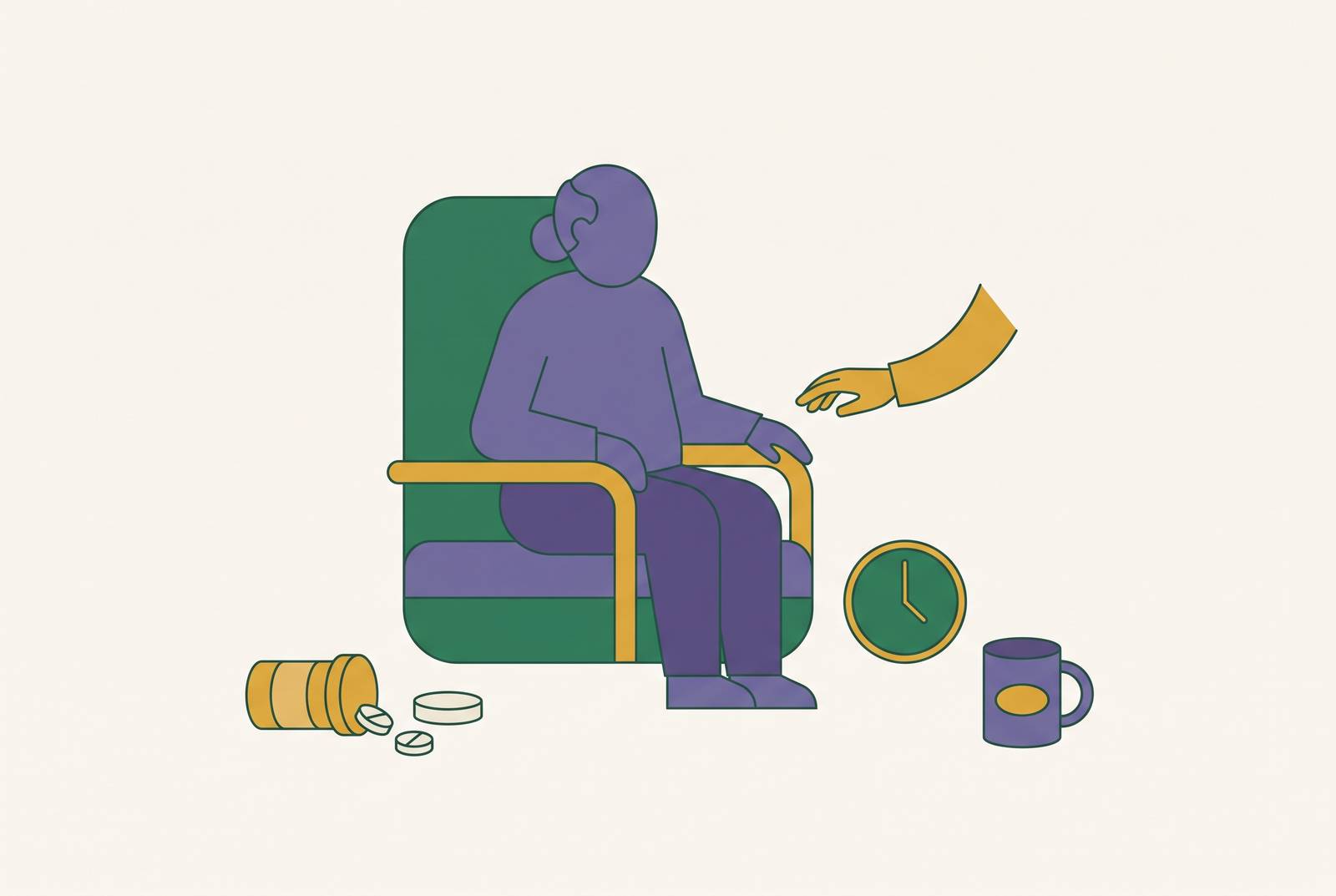
Medication mismanagement sits at the intersection of the physical and cognitive. UCHealth social worker Michele Kuntz identifies it as the most common concern she sees in clinic. If a parent cannot take life-sustaining heart medication as directed, a hospitalization becomes likely. The signal is concrete: stockpiles of unused medication, or an inability to explain what they are taking and why, are actionable warning signs. In both cases, the observable fact is the same: a medication regimen that was once managed independently is no longer reliable.
What cognitive and behavioral changes look like before a diagnosis makes them obvious
Cognitive decline announces itself through behavior long before a formal diagnosis. Families who wait for a diagnosis before acting are already well behind the curve, because the diagnosis usually arrives after the behavioral signals have been present for months or years. The practical discipline is the same as with physical signs: observe the pattern, aggregate the instances, and ask what level of supervision the pattern requires.
The memory warning signs worth distinguishing from normal aging are specific. Health at Home specifically names burning food, getting lost on familiar routes, and forgetting to turn off appliances as memory-lapse signals that go beyond normal forgetfulness. Everyone forgets a name occasionally. A parent who burns food because they forgot the stove was on has crossed into a different category of risk. Those are the signals that require the same pattern-recognition discipline as physical ones.
Confusion and disorientation represent a more advanced cognitive signal. Not knowing what day, season, or place they are in, or failing to recognize familiar faces, significantly raises accident risk. This is the point at which the concern shifts from inconvenience to safety. Family members can watch a parent for an afternoon. They cannot maintain vigilance through every hour of every day.
Social withdrawal deserves its own attention as a cognitive and emotional signal. A gregarious parent who stops answering calls or declines invitations may be managing depression, hearing loss, or early cognitive impairment. The reason matters for what kind of help is needed, which is why Dr. Lum recommends asking open questions rather than making accusations: "Tell me more about why you're not going to book club like you used to." The framing avoids the defensiveness that shuts down conversation. The behavioral signals above answer that question collectively more than any single one of them does alone.
Financial confusion is a cognitive signal with compounding consequences. Unpaid bills, unopened mail, unusual purchases, or large unexplained withdrawals may indicate early cognitive decline or vulnerability to exploitation. A parent who was meticulous with money and now keeps stacks of unopened envelopes is not making a lifestyle choice. The signal points toward either cognitive change or active financial exploitation, and both demand intervention with the same urgency as a fall or a medication error.
When the caregiver's condition becomes a sign the parent needs a different level of care
Caregiver deterioration is not a personal failure. It is a measurable signal that the care arrangement has exceeded safe capacity, and treating it as such removes the guilt that keeps families from acting. The caregiver's own state is clinical data.
The physical signs of caregiver burnout mirror those of overwork in any high-demand role: disrupted sleep, neglected health appointments, withdrawal from the caregiver's own relationships and activities. Each of these reduces the quality of care the parent actually receives. The decline is gradual, which is precisely what makes it hard to see.
Family caregivers now provide a substantial volume of unpaid care each week. Anova Home Health notes that the demands of caregiving accumulate gradually, so the caregiver rarely experiences a single breaking point. The caregiver adapts to each new demand and resets their own baseline, until the point at which impaired functioning becomes the new normal.
Dementia caregiving produces markedly elevated burnout. A family may sustain the latter indefinitely. The former has a carrying capacity, and exceeding it harms both parties.
The financial dimension of caregiver strain compounds the emotional one. Out-of-pocket expenses, reduced work hours, and career interruptions accumulate over time into losses that affect long-term financial security. The average family caregiver spends approximately $7,200 per year out of pocket on caregiving-related expenses. It is not. This is where many families get stuck: they recognize the signs, but the parent's refusal to accept help blocks action.
Why a parent's refusal to accept help is itself part of the pattern to recognize
Parent resistance to help is predictable, common, and should be read as part of the clinical picture rather than as a conclusion that no action is possible. A finding that only 10% of parents agree they need assistance helps explain why families so frequently encounter this wall. The refusal is not an outlier. It is the expected response, which means families need a strategy for it rather than a surrender to it.
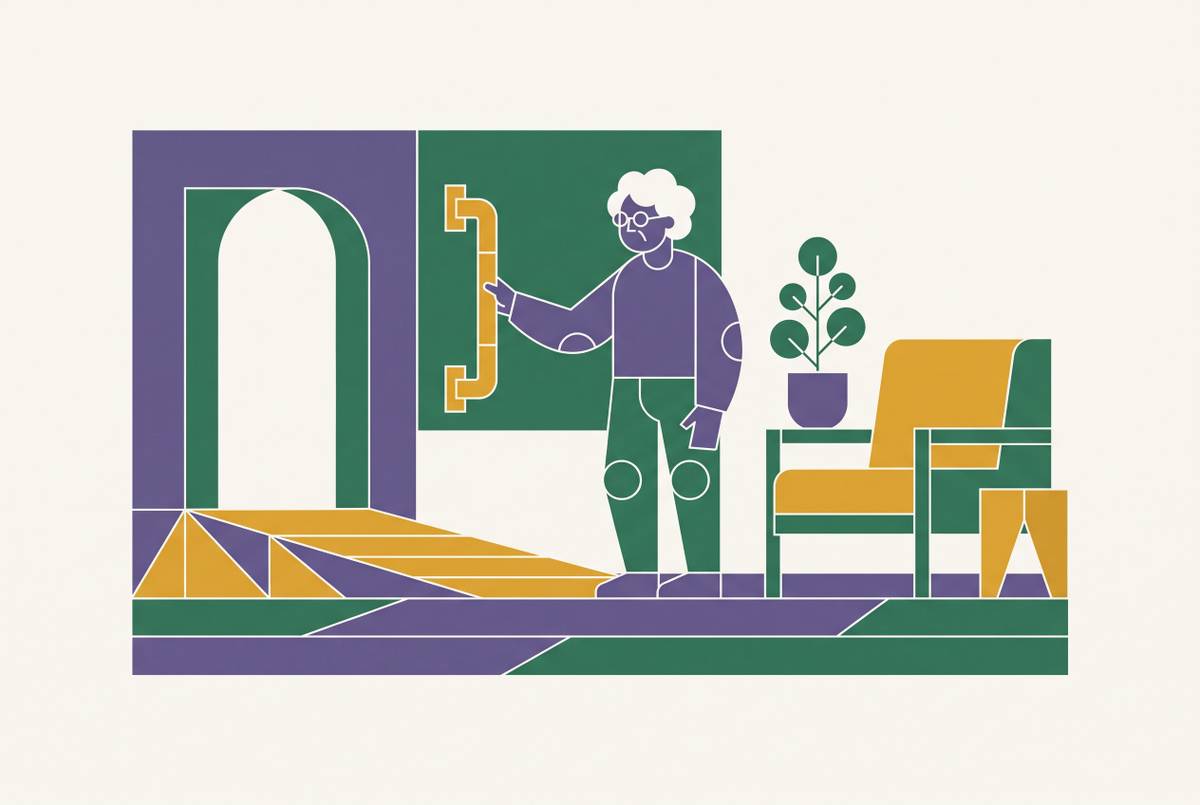
Resistance often functions as self-protection. Loneliness and fear of losing independence can manifest as a tighter attachment to daily routines, anger when approached, or a flat refusal to acknowledge that anything has changed. Dr. Lum recommends making the parent feel part of the decision-making rather than subject to it. The distinction is practical, not sentimental. A parent who participates in choosing a home safety modification is more likely to accept it than one who returns home to find grab bars installed without consultation.
But there is an autonomy limit families must reckon with honestly. Competent adults retain the legal right to make their own decisions even when those decisions seem unsafe to their families. This is the constraint that shapes what is possible. It is also the reason why early conversation matters so much: before crisis strips options, the parent retains more voice in the outcome. Waiting until a fall or hospitalization forces the question means waiting until the parent's capacity to participate in the decision has diminished.
The practical approach Dr. Lum suggests is to bring in trusted third parties: other family members, a social worker from a healthcare clinic, or a case manager from a community organization. These third parties can go over a checklist of assessments, identify genuine needs, and surface what support options exist. Every region of the country is served by an Area Agency on Aging with resources families can access, which gives a concrete first step that does not require a crisis to justify.
It is also worth distinguishing between two kinds of refusal. One is the refusal of a scared but competent parent, who may be persuaded, included, and gradually brought along. The other is the refusal of a parent whose judgment about their own safety is itself impaired. When cognitive decline has progressed to the point where wandering, unsafe cooking, or inability to recognize financial exploitation are present, the autonomy argument changes in character. A parent who cannot reliably assess risk is not exercising autonomy in the ordinary sense. That situation may require a different kind of intervention than simple refusal to accept help from a fully competent adult.
How to tell whether a parent has crossed from needing more help to needing a different care setting
The key distinction families need is not simply how many signs are present, but whether the care need is one that professional home support can meet or one that structurally requires a different care environment. This distinction is the decision framework the preceding sections build toward, and it divides cleanly along the lines of what can be supervised versus what cannot. Expanded home support can meaningfully address a substantial set of care needs. Medication mismanagement without cognitive impairment responds to dispensers and pharmacy packaging. Hygiene decline driven by physical limitation responds to grab bars, shower chairs, and in-home aides. Social isolation responds to adult day programs. Early memory lapses respond to fall monitors, reminder systems, and check-in calls. Housekeeping and meal preparation deficits respond to professional services. Dr. Dr. Lum details home safety modifications (grab bars, clutter removal, good lighting, occupational therapy evaluation) as a legitimate first-line response. These measures preserve the parent's environment while adding the specific support that matches the specific deficit.
A different care setting is indicated when the care need exceeds what any home arrangement can provide, regardless of how many supports are added. The signals are specific. Total loss of mobility requiring a two-person transfer or mechanical lift. Stage 3 or 4 pressure injuries. Feeding tubes or ongoing respiratory treatments. Dementia-driven wandering, aggression, or unsafe cooking that supervision cannot reliably prevent. Frequent unpredictable incontinence with skin-integrity consequences. These are not deficits that an additional service can patch. They are clinical conditions requiring structured supervision or medical management that a family home, even with professional help, cannot reliably sustain.
Care settings differ in what they provide, and matching the setting to the actual clinical need is the practical task. Skilled nursing provides 24-hour clinical monitoring and medical management. Each is a category of care matched to a category of need, and the family's role shifts from providing the care directly to ensuring the right kind of care is provided.
Acting before a crisis preserves options. The parent retains more voice in the decision. The family has time to evaluate settings thoughtfully rather than accepting the first bed available after a hospital discharge. And financial resources can be identified and accessed rather than discovered too late. A benefits assessment that recovers even part of that sum, or that identifies a paid care option the family did not know it qualified for, is not a luxury. It is part of the same disciplined assessment this article has been describing: read the signs, name the threshold, and act before the decision gets made for the family.